Gutscheinbedingungen

**Gültig vom 15.06.2026 bis 17.06.2026 | Gültig für nicht preisgebundene fremdsprachige Bücher | Einzelne Artikel können ausgeschlossen sein | Maximaler rabattfähiger Warenkorbwert 500 € | Nicht kombinierbar mit weiteren Aktionen | Nur einmal pro Person einlösbar | Nur solange der Vorrat reicht

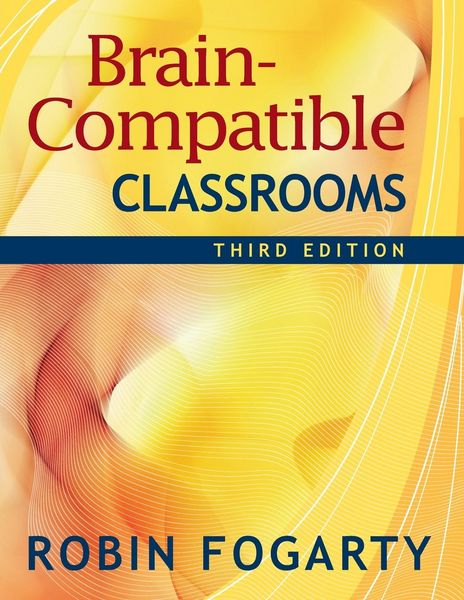
  • Produktbild: Brain-Compatible Classrooms
  • Produktbild: Brain-Compatible Classrooms

Brain-Compatible Classrooms

49,99 €

inkl. gesetzl. MwSt., Versandkostenfrei

Lieferung nach Hause

Beschreibung

Produktdetails

Einband

Taschenbuch

Erscheinungsdatum

15.04.2009

Herausgeber

Fogarty Robin J.

Verlag

Sage Publications

Seitenzahl

248

Maße (L/B/H)

28/21,6/1,4 cm

Gewicht

680 g

Auflage

3. überarbeitete Auflage

Sprache

Englisch

ISBN

978-1-4129-3887-7

Beschreibung

Produktdetails

Einband

Taschenbuch

Erscheinungsdatum

15.04.2009

Herausgeber

Fogarty Robin J.

Verlag

Sage Publications

Seitenzahl

248

Maße (L/B/H)

28/21,6/1,4 cm

Gewicht

680 g

Auflage

3. überarbeitete Auflage

Sprache

Englisch

ISBN

978-1-4129-3887-7

Herstelleradresse

Libri GmbH
Europaallee 1
36244 Bad Hersfeld
DE

Email: gpsr@libri.de

Kundinnen und Kunden meinen

0 Bewertungen

Informationen zu Bewertungen

Zur Abgabe einer Bewertung ist eine Anmeldung im Konto notwendig. Die Authentizität der Bewertungen wird von uns nicht überprüft. Wir behalten uns vor, Bewertungstexte, die unseren Richtlinien widersprechen, entsprechend zu kürzen oder zu löschen.

Die Bewertungen sind nach Format, Anzahl Sterne und Datum sortiert.

Verfassen Sie die erste Bewertung zu diesem Artikel

Helfen Sie anderen Kund*innen durch Ihre Meinung

Kundinnen und Kunden meinen

0 Bewertungen filtern

Weitere Artikel findest du in

  • Produktbild: Brain-Compatible Classrooms
  • Produktbild: Brain-Compatible Classrooms
  • Preface
    Acknowledgments
    About the Author
    Introduction
    Part I. Physiology and Brain Science
    1. Brain Science
    The Brain Is the Universe Within
    How to Be a Critical Consumer of Research on the Brain and Learning
    Just the Facts! What Are the Facts About the Brain?
    Macroview: A Look at the Exterior of the Human Brain
    Geography of the Human Brain (Topography)
    Three Views of the Brain
    Top-to-Bottom View
    Front-to-Back View
    Left-to-Right View
    How Has the Brain Evolved?
    Microview: A Look at the Interior of the Human Brain
    Brain Imaging: How We Know What We Know
    How the Brain Works
    Neurotransmitters
    Differences Between Males and Females
    Part II. Principles for Teaching and Learning
    2. Principles of the Brain and Learning
    The Bridge Between Brain Science and Cognitive Science
    The Brain Principles and the Four-Corner Framework
    Twelve Brain Principles of Caine and Caine
    1. Learning Is Enhanced by Challenge and Inhibited by Threat
    2. Emotions Are Critical to Patterning
    3. Learning Involves Both Focused Attention and Peripheral Perception
    4. The Brain Has a Spatial Memory System and a Set of Systems for Rote Learning
    5. The Brain Processes Parts and Wholes Simultaneously
    6. Learning Engages the Entire Physiology
    7. The Brain Is a Parallel Processor
    8. Learning Is Embedded in Natural and Social Settings
    9. Each Brain Is Unique
    10. The Search for Meaning Is Innate
    11. The Search for Meaning Occurs Through Patterning
    12. Learning Always Involves Conscious and Unconscious Processes
    It¿s All About Learning
    3. Cognitive Science: The Brain Is on My Mind
    Brain Science and Cognitive Science
    Nature Versus Nurture (Heredity Versus Environment)
    Enriched Environments
    Intelligence as a Function of Experience
    Windows of Opportunity
    Nutrition-Cognition Connection
    Care and Feeding of the Brain
    Abuses and Addictions
    New Conclusions
    Emotions and the Intellect
    Safe Climate
    Threat
    Challenge
    The Brain and the Mind
    Brain Versus Mind
    Theories of the Intellect
    General Intelligence Theory: Spearman
    Theory of Cognitive Modifiability: Feuerstein
    Theory of Multiple Intelligences: Gardner
    Successful Intelligence: Sternberg
    Learnable Intelligence: Perkins
    Intelligent Behaviors or Habits of Mind: Costa and Kallick
    Emotional Intelligence: Goleman
    Moral Intelligence: Coles
    Memory, Learning, and the Human Brain
    Memory Metaphor
    It¿s on My Screen
    It¿s on My Desktop
    It¿s on My Menu
    It¿s on My Hard Drive
    Types of Memory Systems
    Short-Term Memory
    Long-Term Memory
    Episodic, Procedural, Conditional, and Emotional Memory
    Memory Lane: Semantic, Episodic, Emotional, Procedural, and Automatic
    Declarative (Explicity) and Procedural (Implicit) Memory
    Learning Through Patterns and Chunking
    It¿s All About Teaching
    Part III. Brain-Friendly Strategies
    4. Strategies for Brain-Compatible Classrooms
    The Four-Corner Framework
    Brain-Compatible Classroom
    Teaching FOR Thinking: Setting the Climate
    Research Base - Physiology, Emotions, Environment
    Principles of Brain-Compatible Learning
    Implications for Learning
    Implications for Teaching: Satisfactory
    Teaching OF Thinking: Instructing Skills and Standards of Learning
    Research Base - Brain, Mind, Intellect
    Principles of Brain-Compatible Learning
    Implications for Learning
    Implications for Teaching: Good
    Teaching WITH Thinking: Structuring Interactions
    Research Base - Active Learning/Constructivist
    Principles of Brain-Compatible Learning
    Implications for Learning
    Implications for Teaching: Excellent
    Teaching ABOUT Thinking: Reflecting Metacognitively
    Research Base - Deep Understanding/Transfer
    Principles of Brain-Compatible Learning
    Implications for Learning
    Implications for Teaching: Superior
    Definition and Description of Brain-Compatible Classrooms
    Research on Teacher Quality
    What Teachers Say
    What Experts Say
    What Kids Say
    A Framework for Quality Revisited
    5. Setting the Climate for Thinking
    Brainwave #1: Emotions - Goleman/LeDeux/Coles
    Braindrops: Strategies
    Threat Alerts the Body
    Challenge Engages the Intellect
    Brainworks: Activities
    People Search
    Fat/Skinny Questions
    The Human Graph
    Brainwave #2: Enriched Environment - Diamond/Conyers and Wilson
    Brainstorms: Application
    Braindrops: Strategies
    Organizational Enrichments
    Sensory Enrichments
    Brainworks: Activities
    Four Corners
    Brainstorms: Application
    6. Teaching the Skills of Thinking
    Brainwave #3: Microskills and Macroskills - Marzano/McTighe
    Braindrops: Strategies
    Microskills
    Macroskills
    Brainworks: Activities
    Microskill Lesson - Analysis for Bias
    Macroskill Lesson - Problem Solving
    Brainstorms: Applications
    Brainwave #4: Development of Skills and Concepts - Posner and Keele/Csikszentmihalyi
    Braindrops: Strategies
    Basic/Apprentice
    Advanced/Master
    Brainworks: Activities
    Basic/Apprentice
    Advanced/Master
    Brainstorms: Applications
    7. Structuring the Interaction With Thinking
    Brainwave #5: Active Learning - Vygotsky/Ausbel
    Braindrops: Strategies
    Teacher Decisions for Cooperative Groups
    BUILD Components/Cooperative Strategies
    Graphic Organizers
    Brainworks: Activities
    Dealing With Paradox
    Brainstorms: Application
    Brainwave #6: Experiential Learning
    Braindops: Strategies
    Multiple Intelligences
    Integrated Curriculum
    Brainworks: Activities
    Curriculum Corners
    Brainstorms: Applications
    8. Thinking About Thinking
    Brainwave #7: Reflection
    Braindrops: Strategies
    Making Meaning
    Transfer of Learning
    Brainworks: Activities
    Transfer Tales
    Brainstorms: Applications
    Brainwave #8: Assessment
    Braindrops: Strategies
    Traditional Assessments
    Dynamic Assessments
    Brainworks: Activities
    Folk Portfolio
    Brainstorms: Application
    Appendix A: Suggested Videos to Illustrate the Four-Corner Framework
    Appendix B: The Brain
    Glossary
    References and Suggested Readings
    Index