7,49 €
inkl. MwSt.
Versandfertig in 1-2 Wochen

4 °P sammeln
Andere Kunden interessierten sich auch für
 The Lacuna17,99 €
 The Zahir7,99 €
 The Zahir15,99 €
 Veronica Decides to Die7,49 €
 The Valkyries7,49 €
 The Valkyries7,99 €
 You Dreamed of Empires19,15 €




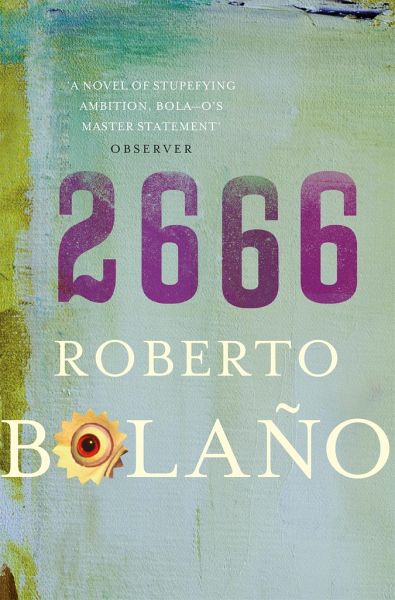
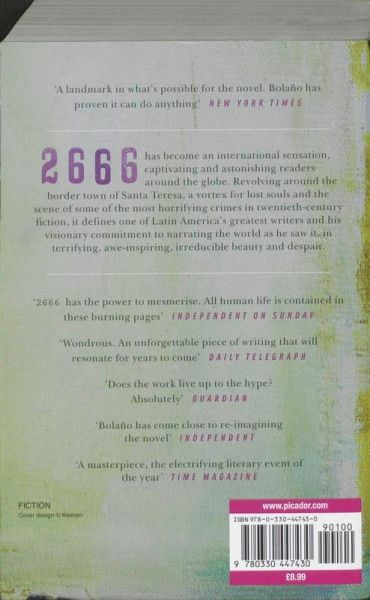
Written with burning intensity in the last years of Roberto Bolaño's life, 2666 has been hailed across the world as the great writer's masterpiece, surpassing everything in imagination, beauty and scope. It is a novel on an astonishing scale from a passionate visionary.
Santa Teresa, on the Mexico-US border: an urban sprawl that draws lost souls to it like a vortex. Convicts and academics find themselves here, as does an American sportswriter, a teenage student with her widowed father, and a reclusive, 'missing' author. But there is a darker side to the town. As in the real town of Juárez, on which Santa Teresa is based, girls and women are disappearing at an alarming rate . . .
As 2666 progresses, as the sense of conspiracy grows, as the shadow of the apocalypse draws closer, Santa Teresa becomes an emblem of the corruption, violence and decadence of twentieth-century European history.
Santa Teresa, on the Mexico-US border: an urban sprawl that draws lost souls to it like a vortex. Convicts and academics find themselves here, as does an American sportswriter, a teenage student with her widowed father, and a reclusive, 'missing' author. But there is a darker side to the town. As in the real town of Juárez, on which Santa Teresa is based, girls and women are disappearing at an alarming rate . . .
As 2666 progresses, as the sense of conspiracy grows, as the shadow of the apocalypse draws closer, Santa Teresa becomes an emblem of the corruption, violence and decadence of twentieth-century European history.

Dieser Autor beweist, dass die Möglichkeiten erzählerischer Experimente noch längst nicht ausgeschöpft sind: Roberto Bolaños kühner, wilder, großartiger Roman "2666".
Von Daniel Kehlmann
Vier Literaturwissenschaftler, spezialisiert auf den rätselhaften deutschen Romancier Benno von Archimboldi, treffen sich im verregneten Deutschland und dann in diversen europäischen Städten auf tristen Kongressen. Bald entsteht ein Geflecht von Beziehungen: Zwei von ihnen, ein Italiener und ein Franzose, verlieben sich in ihre englische Kollegin Liz Norton, die mit beiden eine Affäre beginnt. Alle sind sie zurückhaltende, komplizierte und hochkultivierte Menschen, die ihre Konflikte in langen Gesprächen zu bereinigen versuchen; unterdessen steigt Benno von Archimboldi vom Geheimtipp zum weithin gelesenen, schließlich sogar nobelpreisverdächtigen Autor auf - und bleibt doch unauffindbar; niemand hat ihn gesehen, keiner weiß etwas über seinen Verbleib. Nur ein Gerücht gibt es: Archimboldi soll in der mexikanisch-amerikanischen Grenzstadt Santa Teresa gesehen worden sein.
Kurz entschlossen brechen die Philologen auf - und bald schon werden sie von schrecklichen Träumen und Vorahnungen gequält, etwas Schlimmes scheint im Anzug. Die drohende Atmosphäre verdichtet sich, sobald sie in Santa Teresa angekommen sind, wo sich gerade eine Serie brutaler Frauenmorde ereignet. An diesem Punkt bricht ihre Geschichte ab, und der erste von fünf Abschnitten, "Der Teil der Kritiker", in Roberto Bolaños unvollendetem Großprojekt "2666", selbst so lang wie ein vollständiger Roman, findet sein abruptes Ende.
Der zweite Abschnitt, "Der Teil von Amalfitano", erzählt von einem Universitätsprofessor, dem örtlichen Kontaktmann der vier Germanisten, den einerseits die Angst um seine Tochter Rosa, andererseits die Gespräche mit einer nächtlichen Geisterstimme, die vermutlich seinem toten Vater gehört, allmählich um den Verstand bringen. Ebenjene Tochter Rosa ist eine Hauptfigur des dritten Teils, "Der Teil von Fate", in dem der nordamerikanische Journalist Oscar Fate aus seiner Heimat New York nach Santa Teresa geschickt wird, um einen Artikel über die immer mehr ausufernde Serie der Morde zu schreiben. Fate und Rosa werden ein Paar, verzweifelt bittet Amalfitano den Journalisten, seine Tochter mit in die Vereinigten Staaten zu nehmen, um sie vor dem Schicksal zu bewahren, ein weiteres Verbrechensopfer zu werden.
Allmählich klärt sich das Netz der Anspielungen, Bezüge und Spiegelbilder, und man begreift, dass die Stadt Santa Teresa nichts anderes ist als das Zentrum des Bösen, als eine Hölle, der keiner, der sie einmal betreten hat, heil an Körper und Seele wieder entkommt. Nun stürzt der Roman sich direkt ins Herz der Finsternis. Auf fast vierhundert Seiten erzählt "Der Teil von den Verbrechen" im kühlen Reportageton von einem Gewaltdelikt nach dem anderen. Die subtilen Verwicklungen zwischen den Literaturwissenschaftlern scheinen ebenso fern wie die Nöte des schlaflosen Amalfitano. Wer es durch diesen schier endlosen, brutalen und grandios geschriebenen Albtraum geschafft hat, gelangt zum "Teil von Archimboldi", in dem wir in einem langen Rückblick erfahren, dass dieser mit eigentlichem Namen Hans Reiter heißt, wir lernen ihn als jungen Mann und Wehrmachtsoldaten kennen und folgen ihm, bis er sich schließlich nach Mexiko aufmacht, wo sein Neffe, den wir bereits im vorigen Teil kennengelernt haben, als Hauptverdächtiger der Frauenmorde verhaftet worden ist. Und so endet ein uferloser, ein schlechthin ungeheuerlicher Roman.
Wie sehr dieses Werk noch Fragment ist und was der 2003 verstorbene Autor daran geändert hätte, hätte er lange genug gelebt, um ihn selbst für die Publikation vorzubereiten, darüber kann man nur spekulieren; man muss sich wohl damit bescheiden, das Buch, das uns vorliegt, so zu lesen, als wäre es ebenso abgeschlossen wie Roberto Bolaños anderer Großroman, "Die wilden Detektive", publiziert im Jahr 1998.
Tatsächlich kann man "2666" am besten verstehen, wenn man es mit dem früheren Roman vergleicht. Auch dort ging es um eine rätselhafte Autorengestalt, auch sein ausufernd langer Mittelteil bestand aus aneinandergereihten Erzählpassagen in vielen Dutzend Stimmen und Stilen. Bolaño kann man wie wenigen anderen zuschreiben, was Hannah Arendt am Beispiel von Auden und Brecht "die für die Spätgekommenen charakteristische Facilität in der Beherrschung aller poetischen Spielarten" nannte: Er konnte alles, er traf jeden Stil mit traumwandlerischer Leichtigkeit, und das für ihn Typische ist eben, dass es keinen typischen Bolaño-Ton gibt. Ebenso charakteristisch ist der Mut dieses Autors zur formalen Offenheit. Bei ihm bleiben die lang erwarteten Begegnungen stets aus, die wohlgeschürzten Knoten werden nicht aufgelöst, die klug ausgelegten Spuren führen ins Nichts. Vielleicht hat noch nie ein Schriftsteller solch eine Beherrschung der Erzählkonventionen mit einer solchen Gleichgültigkeit gegen ebendiese Konventionen verbunden.
"2666", das ist eigentlich nicht ein Roman, es sind fünf Romane, unterschiedlich in Motiven, Ton und Technik, die von fünf Seiten aus auf die infernalische Grenzstadt Santa Teresa - also das mexikanische Ciudad Juárez, wo es bekanntlich wirklich eine ungeklärte Serie von Frauenmorden gibt - zulaufen, um sich dort zu treffen; und tatsächlich erwog Bolaño für eine Weile, die fünf Teile unabhängig voneinander zu veröffentlichen, was als literarisches Experiment wohl noch interessanter, publikationstechnisch aber kaum möglich gewesen wäre. Jeder der Teile ist an andere literarische Vorbilder angelehnt: "Der Teil von den Verbrechen" etwa ist in einem kühlen Reportagestil verfasst, in dem Norman Mailers "Lied vom Henker" nachklingt, in den Harlem-Schilderungen des "Teils von Fate" nimmt man Echos von Bukowski und Raymond Chandler wahr, während der "Teil von den Kritikern" in seiner kryptischen Unheimlichkeit nicht nur vom Einfluss Jorge Luis Borges', sondern auch von dem des von Bolaño verehrten Filmemachers David Lynch zeugt - und überhaupt dürfte die Idee einer Kleinstadt als metaphysischer Hölle Lynchs entsetzlicher Gemeinde "Twin Peaks" mehr verdanken, als der erste Blick verrät.
"2666" ist ein kühnes, wildes, hochexperimentelles Ungetüm von einem Roman. In der vorliegenden Form keineswegs perfekt - besonders der zweite, dritte und fünfte Teil haben große Längen -, ist er doch immer noch so ziemlich allem überlegen, was in den letzten Jahren veröffentlicht wurde. "2666", das kann man getrost voraussagen, wird für die Literatur Südamerikas so prägend sein wie in der vorangegangenen Generation die Hauptwerke von Gabriel García Márquez, Mario Vargas Llosa und Julio Cortázar.
Bemerkenswert ist allerdings auch die Geschwindigkeit, mit der dieser zu seinen Lebzeiten fast unbekannte Schriftsteller in den Jahren nach seinem Tod weltweite Anerkennung gefunden hat. Ein Phänomen wie aus einem Roman von Bolaño: So oft stehen bei ihm Schriftsteller im Mittelpunkt, die nie auftreten, rätselhafte Dichter, über die viel spekuliert wird, die aber keine Antwort geben. Nun befindet sich solch ein abwesender Schriftsteller auch im leeren Zentrum von Bolaños mittlerweile weltberühmtem Gesamtwerk. Es ist ein Werk, das uns beweist, dass die Möglichkeiten zu erzählerischen Experimenten noch lange nicht ausgeschöpft sind. Alles darin ist vieldeutig, nur an einem lässt es keinen Zweifel: dass das Schreiben zu den wichtigsten Unterfangen gehört, denen ein Mensch sich in seinem kurzen Leben hingeben kann, dass in dieser gefallenen Welt kaum etwas so viel Hingabe verdient wie die Literatur.
Die Angelegenheit hat allerdings auch einen weniger romantischen Aspekt. Als Roberto Bolaño 2003 beinahe mittellos an Leberversagen starb, stand sein Name schon seit geraumer Zeit auf der Warteliste für eine Lebertransplantation. Wäre er damals schon der weltberühmte Autor gewesen, der er nach seinem Tod wurde, er hätte wohl eine bessere Krankenversicherung und größere Chancen auf die rettende Operation gehabt. Postume Anerkennung ist ein berückendes Schauspiel, da sie das Vertrauen in eine gerechte Nachwelt stärkt, aber wäre die internationale Literaturkritik ein wenig schneller darin gewesen, in Bolaños Büchern jene Weltliteratur zu erkennen, als die sie sie heute rühmt, dieser Schriftsteller würde mit einiger Wahrscheinlichkeit noch leben, er würde weitere Bücher schreiben können, und "2666" läge uns nicht als gewaltiger, mysteriöser Torso vor, sondern als fertiger Roman.
Roberto Bolaño: "2666". Roman. Aus dem Spanischen von Christian Hansen. Hanser Verlag, München 2009. 1096 S., geb., 29,90 [Euro].
Alle Rechte vorbehalten. © F.A.Z. GmbH, Frankfurt am Main

Endlich auch auf deutsch: „2666”, der große, nachgelassene Roman des chilenischen Autors Roberto Bolano
Es heißt, der chilenische Autor Roberto Bolano, der im Sommer 2003, auf eine Lebertransplantation wartend, im Alter von nur fünfzig Jahren in einem Krankenhaus in Barcelona starb, sei ein Meister der Verstellung gewesen. Lustvoll habe er seine Biographie in ein buntscheckiges Kleid aus Mystifikationen und Gerüchten gehüllt, sodass am Ende allenfalls seine engsten Freunde noch wussten, ob er wirklich in jungen Jahren den harten Drogen gänzlich verfallen war oder unter General Pinochet für kurze Zeit im Gefängnis gesessen hatte.
Autoren, die Fiktionen über sich selbst in die Welt setzen und Detektiven, die diesen Fiktionen auf den Grund gehen wollen, begegnet der Leser im Werk Roberto Bolanos auf Schritt und Tritt. Aber dieser Leser müsste mit Blindheit geschlagen sein, würde er deswegen die geradezu umwerfende Offenheit übersehen, mit der dieser Autor das Publikum über den Grundriss seiner geistigen Existenz nie im Zweifel gelassen hat. Es war keine Mystifikation, dass er sich zu Jorge Luis Borges und Kafka bekannte. Es war keine Mystifikation, dass er von seinem 11. September, dem des Jahres 1973, als General Pinochet putschte, argwöhnte, „dass er uns unwiderruflich dressiert hat”. Und es war, vor allem, keine Mystifikation, als er, das Borges-Kapitel „Von Kafka erträumtes Tier” fortschreibend, von sich selbst sagte, er sei „eine apollinische Ratte”.
Selten hat ein Schriftsteller mit solch traumwandlerischer Präzision das Wappentier benannt, in dessen Zeichen er sein Werk geschaffen hat. Dieses paradoxe Fabelwesen ist ein Albino, gebleicht vom gleißend hellen und scharfen Licht der radikalen Aufklärung, wie es in Voltaires „Philosophischem Wörterbuch”, einem Lieblingsbuch Bolanos, herrscht, und es ist zugleich ein Geschöpf der Unterwelt, der Müllhalden und des Trash, mit feiner Witterung für allen Unrat begabt, ein Tier, das sich zumal auf die Spuren der Verbrechen setzt und das Aroma des Todes in allen seinen Verstecken aufspürt. Hinter allen Finten und literarischen Versteckspielen folgt dieses Wappentier einem schlichten Wahlspruch: Es gibt das Böse. Man muss es zur Sprache bringen.
In seinen Essays und Feuilletons – eine Auswahl auf deutsch ist in dem Band „Exil im Niemandsland. Fragmente einer Autobiographie” (2008, Berenberg Verlag, Berlin) erschienen – zitiert Roberto Bolano einmal eine Bemerkung André Bretons aus dessen letzten Lebensjahren: der Surrealismus müsse in den Untergrund gehen, in die Kloaken der Städte und Bibliotheken eintauchen. Breton kam auf dieses Projekt nicht wieder zurück. Bolano hat es aufgegriffen, in seinem Werk insgesamt, vor allem aber in dem voluminösen, mehr als 1000 Seiten umfassenden Roman „2666”, über dem er starb und der nach seinem Tod, als 2004 die Originalausgabe erschien, zunächst in der spanischsprachigen Welt Furore machte, dann, nach der englischen Übersetzung, in den Vereinigten Staaten (SZ vom 13. Februar 2009).
In seinem dunklen, maelstromartigen Zentrum ist dieses monströse Buch die literarische Antwort auf eines der größten Massaker der jüngeren Zeitgeschichte: die Serie von Mordserie in der nordmexikanischen Stadt Ciudad Juárez, der seit ihrem Beginn in den frühen 1990er Jahren mehrere hundert Frauen zum Opfer gefallen sind. Die Stadt Santa Teresa, die Roberto Bolano als Echoraum für dieses realhistorische Geschehen erfunden hat, taucht als Schauplatz von Nachforschungen schon in dem Roman „Die wilden Detektive” (1998) auf, einer Odyssee des literarischen Avantgardismus. Sie liegt wie ihr Vorbild im Wüstengebiet nahe der mexikanisch-amerikanischen Grenze, wo Arizona nicht weit ist und die illegale Einwanderung in die Vereinigten Staaten an der Tagesordnung ist. Für Bolano war dieses nördliche Mexiko der Gegenpol zur südlichen Extremregion Lateinamerikas, Patagonien.
Aus fünf Teilen besteht der Roman insgesamt, Bolano hatte ursprünglich verfügt, er solle als Folge von Einzelbänden publiziert werden. So wollte er den Erlös strecken und angesichts seines möglichen Todes das finanzielle Auskommen seiner Kinder sichern, denen das Buch gewidmet ist. Sein Verleger Jorge Heraldo und sein Freund und Nachlassverwalter Ignacio Echevarría haben sich an diese Verfügung nicht gehalten. Das war eine richtige Entscheidung.
Denn so, zwischen nur zwei Buchdeckeln, tritt für den Leser hervor, was die fünf Teile verbindet, obwohl viele Figuren nur in einem Teil ihren Auftritt haben: es ist das Klima des Verbrechens, der verwischten und der aufgenommenen Spuren, das auch dort herrscht, wo keine Morde begangen, sondern nur Konferenzen zur Gegenwartsliteratur abgehalten werden.
Wie alte Bekannte aus den Essays und früheren Romanen Robert Bolanos kommen die vier Literaturwissenschaftler – ein Franzose, ein Spanier, ein Italiener und eine Engländerin – daher , die zu Beginn im „Teil über die Kritiker” ausziehen, das Geheimnis und die Identität ihres gemeinsamen Idols, des im Verborgenen lebenden deutschen Schriftstellers Benno von Archimboldi, zu lüften.
Kann nicht, wer so durchsichtig nach einem berühmten manieristischen Maler getauft ist, nur der Held eines jener Vexierspiele sein, mit denen die moderne Literatur die Schwere der gemeinen Wirklichkeit so virtuos zum Verschwinden bringt? Und was, wenn dann im zweiten Teil den europäischen Philologen ein chilenischer Intellektueller namens Amalfitano an die Seite tritt, der nach dem Putsch des Jahres 1973 ins Exil gegangen ist, lange in Barcelona gelehrt hat, in Europa in die Schule des Dadaismus und Surrealismus gegangen ist und die bizarrsten Diagramme entwirft, um seinen Studenten die Genealogie der europäischen Philosophen zu erläutern?
Ist nicht vollends die Phantasie der fröhlichen Verwirrspiele an der Macht, wenn dieser Amalfitano im Hof seines Wohnhauses ein (übrigens real existierendes) avantgardistisches Buch, das „Geometrische Vermächtnis” (1975) von Rafael Drieste über die Wäscheleine hängt und damit den Auftrag ausführt, den Marcel Duchamp 1919 seiner Schwester erteilte, nämlich „ein Geometriebuch auf dem Balkon ihrer Wohnung an Bindfäden aufzuhängen, damit der Wind das Buch durchblättern, sich seine eigenen Probleme aussuchen, die Seiten umwenden und herausreißen” könne?
Ja, so muss es beim ersten Blick auf die intrigenspinnenden (und zwischendurch fröhlich vögelnden) europäischen Philologen und den skurrilen Philosophen wirken. Aber das literarische Prinzip des Surrealismus war seit je das unverhoffte und ungeahnte Nebeneinander der scheinbar entfernten Lebens- und Todessphären, und so hat Roberto Bolano sein Personal aus dem Musterbuch der europäischen Avantgarde in eine Welt gesetzt, in der Spiel und Terror, Kunst und Gewalt durch Flügeltüren miteinander verbunden sind, die sich zwar nur spaltweise öffnen, aber doch so, dass sich das Aroma der selbstgenügsamen literarischen Recherche rasch verflüchtigt.
Als Figur, die ernst macht mit dem Bündnis von Kunst und Wahn, taucht im ersten Teil ein englischer Maler auf, der seinen Ruhm als Repräsentant des „Neuen Dekadentismus” durch einen Akt der Selbstverstümmelung erwirbt, indem er sich die Hand, mit der er ein Selbsporträt vollendet hat, abschneidet. Vor allem aber garantiert der Schauplatz der Archimboldi-Recherche, dass sie mehr und mehr selbst zum Hintergrund wird, auf dem sich eine gänzlich unkünstlerische Gewaltszenerie abzeichnet.
Denn die Recherche der literarischen Detektive führt nach Santa Teresa, in eine Mordlandschaft also, von der sie – und der Leser – zunächst nur bruchstückhaft Kenntnis erhalten, die sich aber mit unwiderstehlicher Macht in den Vordergrund schiebt, je weiter der Roman voranschreitet. Das Duchamp-Buch über der Wäscheleine des Herrn Amalfitano weht ebenfalls im Wind von Santa Teresa, wohin er einen Ruf angenommen hat, als sein Vertrag in Barcelona auslief.
Die zunehmende Verdüsterung und Nervosität des Philosophie-Dozenten (und Archimboldi-Übersetzers) Amalfitano, die ihn schließlich Stimmen hören lässt, die aus dem Nichts zu kommen scheinen, resultiert nicht lediglich aus den Labyrinthen des Denkens, in die er mit Wittgenstein gerät. Sie geht vor allem aus dem Schauplatz, aus Santa Teresa hervor. Zwar lebt er im gutbürgerlichen Viertel der Mittelschicht, aber er hat eine Tochter, die gerne ausgeht, und er weiß von der nicht abreißenden Serie von Morden und Vergewaltigungen, die in der Stadt geschehen.
Natürlich weiß der gewiefte Erzähler Roberto Bolano, dass jedem Leser die Willkür auffällt, mit der er alle Fäden im dunklen Zentrum Santa Teresa verknüpft. Aber er kann es sich leisten, diese Willkür gar nicht erst zu kaschieren. Denn wie es ihm gelingt, die Mordserie immer plastischer und bedrängend-realer aus den Kulissen seiner Fiktion hervortreten zu lassen, so gelingt es ihm zugleich, den geradezu demonstrativ als ausgedachte Kunstfigur daherkommenden deutschen Schriftsteller Benno von Archimboldi mehr und mehr mit historischer Realität zu durchdringen.
Es ist die Realität des Nationalsozialismus, des Zweiten Weltkrieges und der Judenvernichtung in Europa. Das Phantasmagorisch-Unwahrscheinliche verliert dieser angeblich 1920 in Preußen, nahe der Ostsee geborene Autor nicht, den in der Nachkriegszeit ein aus dem Exil zurückgekehrter jüdischer Verleger fördert. Aber an die Kurven seiner Lebensgeschichte, die an die Ostfront in Rumänien und auf der Krim führt, lagert sich das Mörderische seiner Welt an. Wie eine Klammer schließt seine Biographie, der im ersten Teil die Philologen nachspüren und die im fünften Teil erzählt wird, den Roman zusammen. Sie enthält in Abbreviatur, was Roberto Bolano einmal als leider nicht ausgeführten Plan des Schriftstellers Nicanor Parras vorgestellt hat: „eine Geschichte des Zweiten Weltkriegs, erzählt oder gesungen, Schlacht für Schlacht, Konzentrationslager für Konzentrationslager, in aller Ausführlichkeit”.
Die beklemmende Episode der mühselig-bürokratischen Vernichtung eines fehlgeleiteten Transportes italienischer Juden gehört zu dieser europäischen Mordgeschichte ebenso wie die virtuos konstruierte Geschichte eines jungen jüdischen Intellektuellen Abraham Ansky aus dem kleinen Ort Kostekino, dessen versteckte Aufzeichnungen der preußische Soldat Hans Reiter findet und in denen er die Anregung für sein Pseudonym Benno von Archimboldi findet: „Die Technik des Mailänders war in seinen Augen die personifizierte Freude. Das Ende der Trugbilder. Arkadien vor der Ankunft des Menschen. Nicht alles, natürlich. Der Koch, zum Beispiel, ein Umkehrbild, das auf eine Weise gehängt eine große Metallschüssel mit Gebratenem zeigt, in der man ein Ferkelchen und ein Kaninchen erkennt, dazu zwei Hände, wahrscheinlich die des Kochs oder eines jungen Mannes, die versuchen, die Schüssel zuzudecken, damit nichts kalt wird, umgekehrt aufgehängt jedoch zeigt es die Büste eines Soldaten in Helm und Brustpanzer und mit einem zufriedenen und verwegenen Lächeln, in dem ein paar Zähne fehlen, das grimmige Lächeln eines alten Söldners, der dich anschaut, und sein Schauen ist noch grimmiger als sein Lächeln, als wüsste er Dinge von dir, schreibt Ansky, von denen nicht einmal du selbst etwas ahnst, ein Schreckensbild, wie er fand.”
Es ist nicht irgendeine Sprache, in die nun mit der deutschen Übersetzung der Roman Robert Bolanos eingeht. Es ist die Sprache einer seiner Hauptfiguren, und deutsche Städte wie Köln oder Paderborn, Hamburg oder Kempten im Allgäu gehören zu seinen Schauplätzen, wie das mexikanische Santa Teresa und die Grenzregionen von Arizona. Und der Schriftsteller ist Benno von Archimboldi, ist nicht nur ein Soldat, der mit Gleichmut das Frontleben und seine sexuellen Exzesse schildert, und ein Mörder, der nach dem Krieg den Verantwortlichen einer Massenerschießung von Juden umbringt. Er ist zugleich ein Repräsentant der deutschsprachigen Literatur insgesamt, die von Lichtenberg über Georg Trakl bis zu Franz Kafka und Alfred Döblin wie in seinen Essays so auch in diesem letzten Roman Bolanos allgegenwärtig ist.
Warum er den rätselhaften Titel „2666” trägt, darüber ist viel gemutmaßt worden. In einem der Romane Bolanos taucht ein Friedhof aus dem Jahr 2666 auf. Natürlich wusste er, dass seit George Orwells „1984” Zahlentitel, die sich als Jahreszahlen lesen lassen, von der Aura der schwarzen, negativen Utopie umgeben sind. Und je mehr der Leser in diesem Romangebirge voranschreitet, desto weniger spekulativ muss es ihm erscheinen, in der „2666” eine Verdoppelung des Jahreszahl „1333” zu erkennen, als Verweis auf jenes Jahrhundert, in dem die Azteken ihrer Herrschaft über Mexiko und ihre Hauptstadt Teniochtitlan errichteten.
Denn der Opferkult der Azteken gehört zu den Hintergründen, vor die Roberto Bolano die Massengräber seines Romans gestellt hat, seien es die de Zweiten Weltkriegs und der Judenvernichtung oder die der ermordeten Frauen von Santa Teresa.
Der gesamte vierte Teil des Romans ist, über weit mehr als 300 Seiten hinweg, diesem in der Zeit gedehnten Massaker gewidmet, nachdem im dritten Teil ein schwarzer Reporter aus New York nach Santa Teresa gereist ist, um für seine Zeitung „Black Dawn” von einem Boxkampf zu berichten, und der Roman im Dialog mit Trash-Filmen und Krimimythen den Schauplatz der Verbrechen bereits erkundet hat, ehe sie selbst in den Mittelpunkt treten.
Dieser Mittelpunkt ist in der zeitgenössischen Literatur einzigartig. Man kann den Kritikern, die ihm kopfschüttelnd Langeweile attestiert haben, nicht vorwerfen, ihr Unbehagen sei unbegründet. Denn aus hunderten einzelner Fälle webt in diesem Teil der Roman ein riesiges Leichentuch aus immer demselben Stoff, keine Erdrosselung und keine Vergewaltigung lässt er ins Summarische sich verflüchtigen, zu jeder nennt er den Namen und die Herkunft des Opfers, versucht er dessen letzte Stunden zu rekonstruieren.
Keine Nachlässigkeit der Behörden entgeht ihm, keine Blutprobe, die unausgewertet bleibt, kein Spermarest, der auf dem Weg ins Labor oder von dort zurück verloren geht. Nah bleibt der Roman an den Angehörigen, an den Ehemännern, die im Schatten des Phantoms eines ungreifbaren Serienkillers ihrer Wut nachgeben, hinreißend setzt er die Wahrsagerin ins Bild, die im Fernsehen wie in Trance von den Morden spricht. Kühl verfolgt er die Geschichte des verhafteten Deutsch-Amerikaners, dem die Morde zur Last gelegt werden, ohne dass nach seiner Verhaftung die Serie endet.
In seinem Roman „Amuleto” (1999) hat Roberto Bolano das Massaker an den chilenischen Studenten im Jahre 1968 aufgegriffen, hier ist es von der Diktatur gelöst und geht aus der normalen Weltordnung hervor, wird von der Wirklichkeit gewissermaßen ausgeschwitzt. Man ahnt in diesem radikalen vierten „Teil von den Verbrechen” die Wut des Erzählers, die ihm den Mut gibt, so lange auf dem Grat der Monotonie zu verweilen, an dessen Abgründen die Langeweile lauert, der aber zugleich die Literatur des modernen Verbrechens ganz von der Form des Kriminalromans löst und den „Sex & Crime”-Stoff in vollkommener Trostlosigkeit zur Darstellung bringt.
An einer Stelle dieses nicht leicht zu lesenden Romans erinnert sich der unglückliche chilenische Intellektuelle Amafiltano an einen spindeldürren jungen Apotheker in Barcelona, der Kafkas „Verwandlung” dem „Process” vorzog, so wie er auch die Erzählung „Bartleby” dem „Moby Dick” vorzog: „Trauriges Paradox, dachte Amalfitano. Nicht einmal die belesenen Apotheker wagen sich mehr an die großen, die unvollkommenen, die überschäumenden Werke, die Schneisen ins Unbekannte schlagen. Sie geben den perfekten Fingerübungen der großen Meister den Vorzug. Anders gesagt: Sie wollen die großen Meister bei eleganten Fechtübungen beobachten, aber nichts wissen von den wahren Kämpfen, in denen die großen Meister gegen jenes Etwas kämpfen, das uns allen Angst einjagt, jenes Etwas, das gefährlich die Hörner senkt, und es gibt Blutvergießen, tödliche Wunden und Gestank.”
Ein solches großes, unvollkommenes, überschäumendes Werk, das die Wunden und den Gestank so wenig scheut und eben deshalb geradezu unbändig der Lebenslust, auch der sexuellen, huldigt, ist Roberto Bolanos letzter Roman. LOTHAR MÜLLER
ROBERTO BOLANO: 2666. Roman. Aus dem Spanischen übersetzt von Christian Hansen. Carl Hanser Verlag, München 2009. 1096 Seiten, 29,90 Euro.
„Hänge ein Geometriebuch an Bindfäden, damit der Wind es durchblättern kann!”
„Die Technik des Arcimboldo war in seinen Augen das Ende aller Trugbilder”
„Sein Schauen ist noch grimmiger als sein Lächeln, in dem ein paar Zähne fehlen”
Kreuze für die in Industriebrachen ermordeten und auf Müllkippen verscharrten Opfer der Frauenmorde von Ciudad Juárez, August 2006 Foto: Carlos Cazalis/Corbis
Roberto Bolano (1953-2003) Foto: De Raphael / Gamma / Eyedea Presse/laif
SZdigital: Alle Rechte vorbehalten - Süddeutsche Zeitung GmbH, München
Jegliche Veröffentlichung exklusiv über www.sz-content.de
Readers who have snacked on Haruki Murakami will feast on Roberto Bolaño. Sunday Times