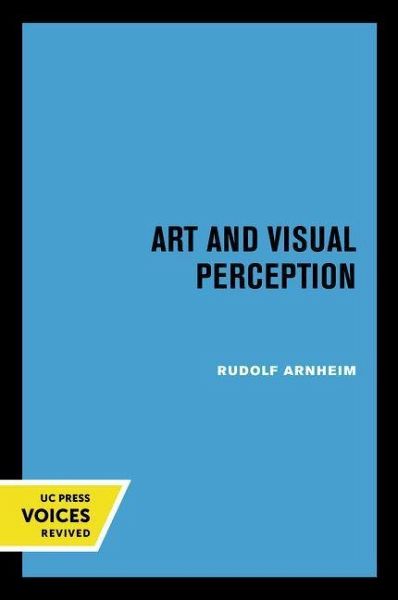
31,99 €
inkl. MwSt.
Versandkostenfrei*Liefertermin unbestimmt
Melden Sie sich
hier
hier
für den Produktalarm an, um über die Verfügbarkeit des Produkts informiert zu werden.
oder sofort lesen als eBook

16 °P sammeln
Andere Kunden interessierten sich auch für
 The Story of Looking17,99 €
 Visual Intelligence15,99 €
 Eye-Tracking31,99 €
 Reality, Perception, and Your Company's Workplace Culture36,99 €
 Philosophy of Perception49,99 €
 Speech Physiology, Speech Perception, and Acoustic Phonetics54,99 €
 Sensory Perception, History and Geology27,99 €
"In The Ego and the Id Freud argued that a cogent thought process, to say nothing of conscious intellectual work, could not exist amidst the unruliness of visual experience. Over the last half century in a sequence of landmark books, Rudolf Arnheim has not only shown us how wrong that is, he has parsed the grammar of form with uncanny acuity and taught us how to read it."--Jonathan Fineberg, author of Art since 1940: Strategies of Being "It is a book of first-rate importance, and many aspects of the psychology of art are for the first time given a scientific basis. It is sure to have a far-reaching influence, and artists themselves would benefit from reading it."--Sir Herbert Read